
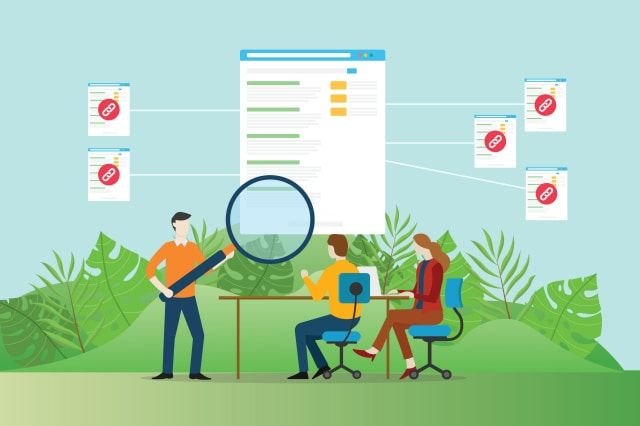
Learn how to build local backlinks for a small business with practical strategies including local directories, business associations, guest content, local media, partn...
For a small business, ranking on Google can be challenging when larger companies already dominate the search results. One of the most effective ways to strengthen your local SEO presence is to earn relevant backlinks from websites, organizations, directories, and businesses within your local area.
If you are wondering how to build local backlinks for a small business, the good news is that you do not need hundreds of links to make an impact. A smaller number of relevant, trustworthy, and locally connected backlinks can be much more valuable than a large collection of unrelated links.
Local backlinks help search engines understand where your business operates, what industry you belong to, and how your website is connected to the local community. When combined with a well-optimized Google Business Profile, quality content, consistent business information, and strong on-page SEO, local link building can become an important part of a long-term SEO strategy.
According to digital marketing professional Mohan Saini, small businesses should focus on earning backlinks that are genuinely relevant to their location and audience rather than chasing links simply for quantity.
What Are Local Backlinks?
Local backlinks are links from other websites that point to your business website and have some meaningful connection with your geographic area, local community, or target market.
For example, imagine you own a web development company in Jaipur. A backlink from a local business association, Jaipur-based technology blog, local news website, chamber of commerce, or a relevant educational organization can provide stronger local relevance than a random link from an unrelated website.
Local backlinks may come from:
- Local business directories
- City-specific websites
- Local newspapers
- Community organizations
- Business associations
- Local bloggers
- Industry websites
- Event websites
- Educational institutions
- Local suppliers and partners
- Sponsorship pages
- Chamber of commerce websites
The most important factor is relevance. A backlink should ideally make sense to a real visitor, not just a search engine.
Why Are Local Backlinks Important for Small Businesses?
Large brands often have thousands of backlinks because they have been online for years. Small businesses usually do not have the same authority or marketing resources.
Local link building provides an opportunity to compete more effectively within a specific geographic market.
1. They Strengthen Local SEO
Relevant local backlinks can reinforce the relationship between your business and its target location. When multiple trustworthy local websites mention your business, it can provide useful contextual signals about your local presence.
This is particularly valuable for businesses targeting searches such as:
- Digital marketing agency in Jaipur
- Web development company in Jaipur
- SEO services in Jaipur
- Local accountant in Chicago
- Best restaurant near [city]
- Plumbing services in [location]
The backlink itself is not a guarantee of higher rankings, but it can contribute to a broader local SEO strategy.
2. They Can Increase Referral Traffic
A quality backlink is not only an SEO asset.
Suppose a local business website publishes an article about useful service providers in the city and links to your website. Readers who trust that publication may click the link and visit your website.
That means the backlink can generate:
- Referral traffic
- Brand awareness
- Potential enquiries
- New customers
- Business relationships
A link that brings real visitors can be more valuable than a link that exists only for SEO purposes.
3. They Build Local Brand Authority
When your business is mentioned by respected local organizations and websites, people may become more familiar with your brand.
For example, a small company featured in a local business publication, community website, or industry event page can gain credibility that would be difficult to achieve through advertising alone.
Local SEO is not just about rankings. It is also about becoming a recognizable and trusted business within your market.
How to Build Local Backlinks for a Small Business
Now let's look at practical strategies you can use to build local backlinks naturally.
1. Get Listed in Relevant Local Business Directories
Start with reputable business directories that are relevant to your location and industry.
Create a complete business profile with:
- Business name
- Address
- Phone number
- Website
- Business category
- Description
- Opening hours
- Services
- Social profiles
Avoid submitting your website to hundreds of low-quality directories simply to increase backlink numbers.
Instead, identify directories that are:
- Relevant to your industry
- Trusted by local users
- Properly maintained
- Geographically relevant
- Useful to potential customers
Quality and relevance should always come before quantity.
2. Join Local Business Associations
Local business associations can be excellent sources of relevant links.
Many organizations have member directories where they publish information about participating businesses. If your business genuinely belongs to the organization, becoming a member may provide both networking opportunities and an online business profile.
Look for:
- Chamber of commerce organizations
- Local trade associations
- Industry groups
- Professional associations
- Entrepreneur communities
The goal should be genuine participation, not simply buying a link.
3. Build Relationships With Local Businesses
One of the easiest ways to discover local backlink opportunities is to build relationships with businesses around you.
Suppose you provide digital marketing services and regularly work with:
- Web developers
- Graphic designers
- Printing companies
- Photography studios
- Software companies
- Business consultants
You may naturally collaborate on content, projects, events, interviews, or resources where mentioning each other's businesses makes sense.
The key is to avoid artificial link exchanges. A backlink should exist because it provides value to the audience.
4. Create Local Resource Pages
Create useful resources specifically designed for people in your city or region.
For example:
“Complete Digital Marketing Guide for Small Businesses in Jaipur”
or
“Local SEO Checklist for Jaipur Businesses”
A useful local resource can attract attention from:
- Local bloggers
- Business websites
- News publications
- Community organizations
- Entrepreneurs
- Educational websites
The more useful and original the resource, the greater its potential to earn organic mentions.
5. Sponsor Relevant Local Events
Local events can create legitimate opportunities for business exposure.
Consider sponsoring events that are relevant to your audience, such as:
- Business conferences
- Educational events
- Charity activities
- Startup events
- Local sports events
- Community programs
Some event organizers publish sponsor information on their websites.
However, sponsorship should primarily be about supporting the community and reaching your audience. Do not participate solely for the purpose of obtaining a backlink.
6. Get Featured in Local News Websites
Local news websites frequently publish stories about businesses, entrepreneurs, events, new launches, community initiatives, and local trends.
Instead of sending generic promotional emails, provide something genuinely newsworthy.
For example, you could share:
- A new local initiative
- Original research
- Community involvement
- An industry report
- A business milestone
- An educational event
- Expert commentary on a local issue
Journalists are more likely to pay attention when you provide useful information rather than simply asking for a link.
7. Publish Original Local Data and Research
Original research is one of the strongest ways to attract natural backlinks.
For example, a digital marketing company could publish:
“Local SEO Trends Among Small Businesses in Jaipur: 2026 Survey”
If the research contains useful statistics and insights, other websites may reference it in their own articles.
This creates opportunities for natural editorial backlinks.
Original research can include:
- Surveys
- Industry statistics
- Customer behavior studies
- Local market analysis
- Case studies
- Expert interviews
This approach takes more effort, but it can generate much stronger links than mass directory submissions.
8. Write Guest Articles for Relevant Local Websites
Guest blogging can still be useful when done properly.
Instead of targeting websites solely because they accept guest posts, find websites where your expertise genuinely matches their audience.
For example, if you are a digital marketing expert, you could contribute articles about:
- Local SEO
- Google Business Profile optimization
- Content marketing
- Website performance
- Small business marketing
- Search engine optimization
The objective should be to educate the publication's readers. If a relevant author bio or contextual link is included naturally, it can support your online presence.
Avoid publishing the same article across multiple websites.
9. Create Local Case Studies
Case studies can naturally attract backlinks because they demonstrate real-world results and expertise.
A strong local case study could explain:
- The client's initial challenge
- The strategy used
- Technical improvements
- Content strategy
- Local SEO activities
- Results achieved
- Lessons learned
For example, MS Infotech could publish a detailed case study about improving the local visibility of a small business.
Make sure claims are accurate and supported by genuine data.
10. Connect With Local Bloggers and Creators
Local bloggers and content creators often have highly targeted audiences.
Instead of immediately asking them for a backlink, build a relationship.
You can:
- Share their content
- Comment thoughtfully
- Attend local events
- Offer expert insights
- Provide useful data
- Collaborate on local guides
- Participate in interviews
A genuine relationship can eventually lead to natural mentions and referrals.
11. Use Competitor Backlink Research
Competitor research can help you discover websites that already link to businesses in your industry.
Look for patterns such as:
- Local directories
- Industry publications
- Business associations
- Local blogs
- Sponsorship pages
- Resource pages
- Local media
Do not copy every backlink your competitor has. Instead, evaluate whether the website is relevant, trustworthy, and useful for your own audience.
Competitor research should help you discover opportunities—not encourage you to build spammy links.
12. Create Content That Local Websites Want to Reference
If every article on your website is purely promotional, other websites have little reason to link to it.
Create content that solves real problems.
Examples include:
- Local SEO guides
- Industry checklists
- Market reports
- How-to tutorials
- Local statistics
- Original research
- Expert interviews
- Local business guides
- Case studies
- Free tools and calculators
The stronger the resource, the easier it becomes to earn links naturally.
Local Backlinks vs. General Backlinks
Not every backlink has the same purpose.
A general backlink may come from a website relevant to your industry but located somewhere else. A local backlink adds geographic relevance as well.
For a local business, a combination of both can be useful.
For example, a Jaipur-based SEO agency could benefit from:
- SEO industry publications
- Digital marketing blogs
- Jaipur business directories
- Jaipur news websites
- Local business associations
- Local event websites
This creates a more natural backlink profile instead of relying exclusively on one type of link.
What Makes a Good Local Backlink?
Before pursuing a backlink, ask yourself a few questions:
Is the website relevant?
A relevant website is generally more valuable than an unrelated website.
Does the website have real visitors?
A website that attracts a genuine audience can potentially send referral traffic.
Is the website trustworthy?
Avoid websites that exist primarily to sell links or publish huge amounts of low-quality content.
Does the link make sense contextually?
The link should naturally fit within the content.
Would a real person find the link useful?
This is one of the simplest tests.
If the answer is yes, the backlink is more likely to be worth pursuing.
Local Link Building Mistakes to Avoid
While building backlinks, avoid shortcuts that can damage your SEO strategy.
Buying Large Numbers of Low-Quality Links
Thousands of cheap links from unrelated websites are unlikely to create sustainable SEO value.
Excessive Exact-Match Anchor Text
Using the same keyword repeatedly as anchor text can make your backlink profile look unnatural.
Use a natural mixture of:
- Brand names
- Website URLs
- Descriptive phrases
- Natural language
- Relevant keywords where appropriate
Spammy Directory Submissions
Do not submit your website to every directory you can find. Focus on quality local and industry-specific platforms.
Private Blog Networks
Links from networks created primarily to manipulate search rankings can create unnecessary SEO risks.
Automated Link Building
Automated comments, forum spam, and mass-generated backlinks rarely provide sustainable value.
Ignoring Relevance
A backlink from an unrelated website simply because it has high metrics is not necessarily a good link for a local business.
A Simple Local Backlink Strategy for Small Businesses
If you are starting from zero, you do not need an overwhelming strategy.
Begin with this process:
Step 1: Optimize your website and important local landing pages.
Step 2: Make sure your business information is consistent across legitimate platforms.
Step 3: Claim relevant local and industry profiles.
Step 4: Identify 20–30 relevant local websites and organizations.
Step 5: Create one genuinely useful local resource.
Step 6: Build relationships with local businesses and publishers.
Step 7: Promote your resource through relevant channels.
Step 8: Pitch original stories, data, and expert insights to local media.
Step 9: Monitor newly earned backlinks.
Step 10: Continue creating useful content and building genuine relationships.
Consistency is more important than trying to build hundreds of backlinks in a short period.
How MS Infotech Approaches Local SEO
At MS Infotech, local SEO is approached as a complete digital marketing process rather than a backlink-only activity.
According to Mohan Saini, an effective local SEO strategy should connect several elements, including website optimization, useful content, local relevance, business citations, reputation signals, technical SEO, and high-quality link opportunities.
For small businesses, the objective should not simply be to obtain more backlinks. The objective should be to build a website that deserves to be referenced by other websites.
That means publishing useful information, demonstrating expertise, participating in the local business community, and creating resources that genuinely help customers.
Final Thoughts
Learning how to build local backlinks for a small business is less about finding a shortcut and more about building genuine connections between your business, your community, and relevant websites.
Start with reputable local directories and business organizations, develop relationships with nearby businesses, contribute useful information to local publications, create original resources, and publish content that people actually want to reference.
Remember that SEO is a long-term process. A few relevant and trustworthy backlinks can be more valuable than hundreds of unrelated links.
When local link building is combined with strong on-page SEO, helpful content, technical optimization, a properly managed Google Business Profile, and a positive user experience, it can contribute to a stronger and more sustainable local search presence.
For small businesses, the best backlink strategy is ultimately simple: create something valuable, become visible in your local community, build genuine relationships, and earn links that make sense.