
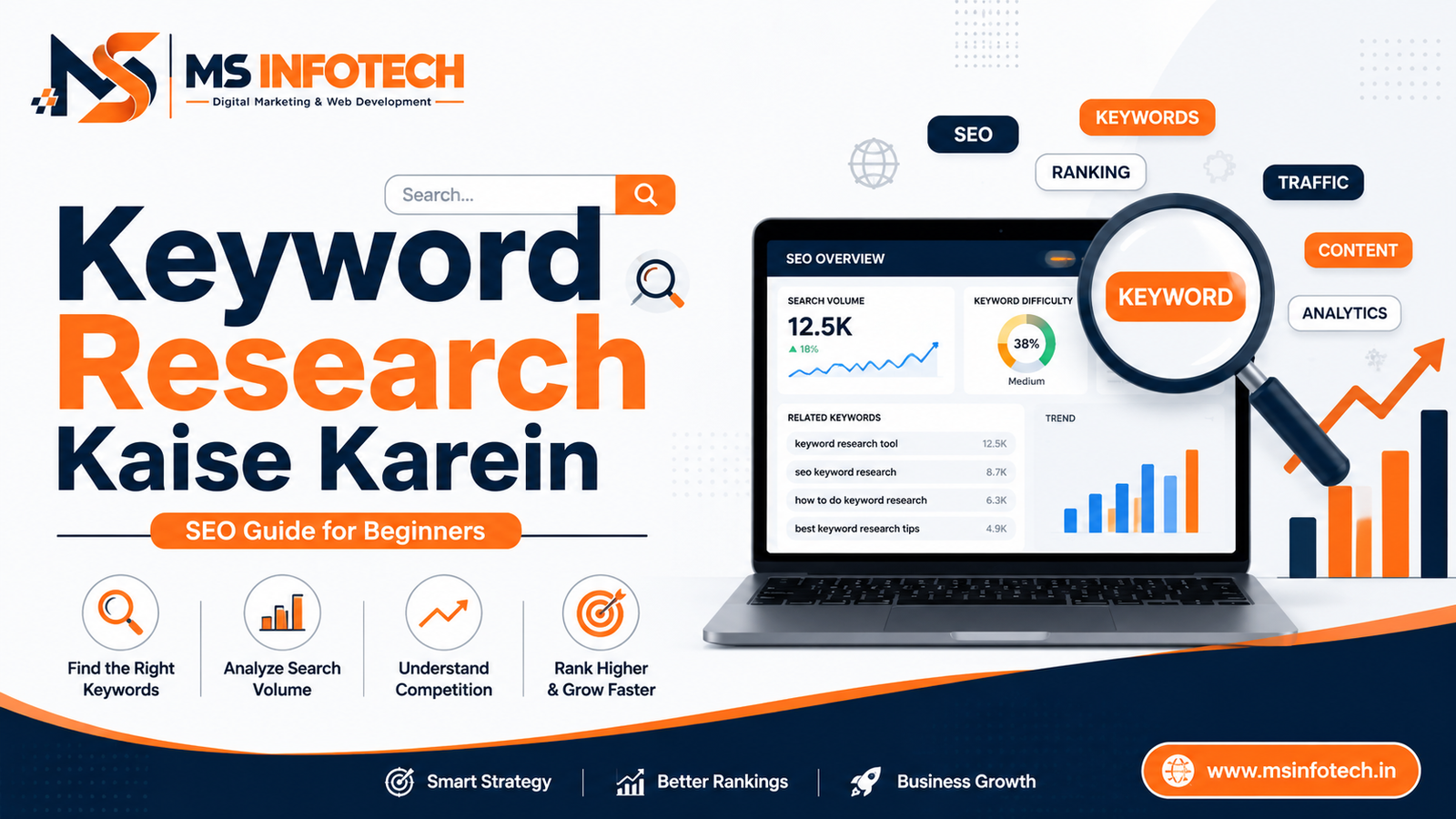
Website ke liye content likhna shuru karne se pehle ek basic sawaal ka jawab milna zaroori hai—log Google par search kya kar rahe hain?Aapka content kitna bhi achha ky...
Website ke liye content likhna shuru karne se pehle ek basic sawaal ka jawab milna zaroori hai—log Google par search kya kar rahe hain?
Aapka content kitna bhi achha kyon na ho, agar uska topic target audience ki search se match nahi karta, to website par relevant traffic lana mushkil ho sakta hai. Isi problem ko keyword research solve karti hai.
Keyword Research Kaise Karein sirf search volume dekhne tak limited nahi hai. Is process mein humein samajhna hota hai ki user kya chahta hai, kis language mein search karta hai, competition kitna hai aur kaunsa keyword business ke liye enquiry ya sale generate kar sakta hai.
Is guide mein MS Infotech aapko keyword research ka complete practical process simple Hinglish mein samjha raha hai.
Keyword Research Kya Hai?
Keyword research woh process hai jisme hum un words aur phrases ko identify karte hain jinhe log Google ya kisi doosre search engine par information, product, service ya solution dhoondhne ke liye type karte hain.
Maan lijiye aap Jaipur mein website development services provide karte hain. Aapke potential customers kuch is tarah ke keywords search kar sakte hain:
- Website development company in Jaipur
- Web designer near me
- Ecommerce website developer Jaipur
- Business website banane wali company
- Affordable web development services
- Small business website cost
Ye sab keywords ek jaise nahi hain. Kuch users information collect kar rahe hain, kuch companies compare kar rahe hain aur kuch turant service provider se contact karna chahte hain.
Effective keyword research in sabhi differences ko samajhne mein help karti hai.
Keyword Research SEO Ke Liye Kyon Zaroori Hai?
Bina research ke content banana andhere mein teer chalane jaisa ho sakta hai. Aapko lag sakta hai ki koi topic important hai, lekin ho sakta hai target audience use kisi doosre naam se search kar rahi ho.
Keyword research se aapko pata chalta hai:
- Customers kaun se words use karte hain
- Kis topic ki demand hai
- Kaun se keywords par competition zyada hai
- Kis search ke peeche buying intent hai
- Kaun sa keyword blog ke liye hai
- Kaun sa keyword service page ke liye hai
- Website par kaun se naye pages banane chahiye
- Existing content mein kya improve kiya ja sakta hai
Google Search Essentials ke mutabik, website owners ko woh words prominent locations par use karne chahiye jinhe log unke content ko dhoondhne ke liye use karte hain. In locations mein page title, main heading, alt text aur link text shamil ho sakte hain. Saath hi, content ko helpful aur people-first rehna chahiye. Google Search Essentials
Keyword Research Shuru Karne Se Pehle Business Ko Samjhein
Keyword tool open karna research ka pehla step nahi hai. Sabse pehle business ko samajhna chahiye.
Khud se ye sawaal poochhein:
- Business ka main product ya service kya hai?
- Ideal customer kaun hai?
- Customer ki primary problem kya hai?
- Business kin locations ko serve karta hai?
- Customer kis language mein search karta hai?
- Service B2B hai ya B2C?
- Customer ko decision lene mein kitna samay lagta hai?
- Website ka main goal traffic, lead, call ya online sale hai?
Maan lijiye do companies digital marketing services provide karti hain. Ek local small businesses ko target karti hai, jabki doosri large ecommerce brands ke saath kaam karti hai. Service category similar hone ke bawajood dono ki keyword strategy alag honi chahiye.
Step 1: Seed Keywords Ki List Banayein
Seed keywords aapke business, service ya topic se directly related basic terms hote hain. Inhi se detailed keyword research shuru hoti hai.
MS Infotech ke liye kuch possible seed keywords ho sakte hain:
- Digital marketing
- SEO services
- Website development
- Google Ads
- Social media marketing
- Local SEO
- Software development
Agar business Chartered Accountant ka hai, to seed keywords ho sakte hain:
- Chartered Accountant
- GST registration
- Income tax consultant
- Company audit
- ITR filing
- Business registration
Is stage par search volume ki tension na lein. Pehle business ki sabhi important categories aur customer problems ko list karein.
Step 2: Customer Ki Language Mein Sochiye
Business owner aur customer ek hi service ke liye alag words use kar sakte hain.
Ek SEO professional “Google Business Profile optimisation” keh sakta hai, jabki customer search karega:
- Google Map par business kaise laayein
- Google Map ranking kaise badhayein
- Business near me search mein kaise aaye
- Google business profile setup company
Technical language par depend rehne se aap valuable keyword opportunities miss kar sakte hain.
Customer ki language samajhne ke liye:
- Sales team se baat karein
- WhatsApp enquiries padhein
- Contact forms review karein
- Customer calls ke common questions note karein
- Social media comments dekhein
- Competitor reviews padhein
- Frequently asked questions collect karein
Real customer conversations keyword research ka bahut useful source hoti hain.
Step 3: Google Search Suggestions Ka Use Karein
Google ke search box mein apna seed keyword type karein. Google aapko related suggestions dikhayega.
Example ke liye “local SEO” type karne par suggestions is tarah ke ho sakte hain:
- Local SEO services
- Local SEO for small businesses
- Local SEO company near me
- Local SEO kaise kare
- Local SEO checklist
Search results page par “People also ask” questions aur related searches ko bhi check karein.
Ye suggestions aapko user ki actual search language aur subtopics samajhne mein help karte hain. Lekin sirf suggestion dikhne ka matlab ye nahi ki keyword automatically profitable hoga. Use business relevance aur search intent ke basis par evaluate karna zaroori hai.
Step 4: Google Keyword Planner Ka Use Karein
Google Keyword Planner, Google Ads ka keyword research tool hai. Iska use naye keyword ideas, estimated search activity, competition aur advertising forecasts dekhne ke liye kiya ja sakta hai.
Keyword Planner mein do useful options milte hain:
Discover New Keywords
Is option mein aap apni service, product ya website enter karke related keyword ideas find kar sakte hain.
Get Search Volume and Forecasts
Agar aapke paas pehle se keyword list hai, to is option se unka estimated performance data dekha ja sakta hai.
Keyword Planner ka competition column primarily advertisers ke beech competition ko represent karta hai. Use direct organic SEO difficulty score samajhna sahi nahi hoga.
Data ko exact guarantee ke roop mein na dekhein. Use comparison aur direction ke liye use karein.
Step 5: Google Trends Se Demand Compare Karein
Google Trends kisi keyword ki relative popularity ko time, region aur category ke hisaab se compare karne mein help karta hai.
Aap iska use ye jaanne ke liye kar sakte hain:
- Keyword ki demand badh rahi hai ya kam ho rahi hai
- Search seasonal hai ya regular
- Kis state ya region mein interest zyada hai
- Do similar keywords mein kaunsa popular hai
- Kaun se related topics grow kar rahe hain
Maan lijiye aap “digital marketing course” aur “online digital marketing course” compare karna chahte hain. Google Trends se aap in dono terms ka interest pattern dekh sakte hain.
Dhyan rakhein ki Trends data exact monthly search volume nahi dikhata. Ye relative popularity show karta hai. Isliye ise Keyword Planner, Search Console aur business data ke saath use karna behtar hai.
Step 6: Competitors Ke Keywords Analyse Karein
Google par apna main keyword search karke top-ranking pages ko observe karein.
Check karein:
- Page ka format kya hai?
- Title mein kaun sa phrase use hua hai?
- Main headings kya cover karti hain?
- Page service-oriented hai ya informational?
- Kaun se subtopics discuss kiye gaye hain?
- Content mein images, FAQs ya examples hain?
- Page local intent ko target karta hai?
- Kis type ka call to action diya gaya hai?
Competitor analysis ka purpose content copy karna nahi hai. Iska goal search intent aur existing content standard ko samajhna hai.
Agar top ten pages ek hi information repeat kar rahe hain, to sochiye aap kya original value add kar sakte hain:
- Real experience
- Better examples
- Updated information
- Local insight
- Screenshots
- Step-by-step process
- Pricing explanation
- Common mistakes
- Practical checklist
Google third-party SEO tools ke data ko blindly follow karne ke against caution karta hai. Third-party tools ke paas Google ka internal ranking data nahi hota aur woh ranking guarantee nahi kar sakte. Google first-party performance data ke liye Search Console use karne ki salah deta hai. Google’s third-party SEO tools guidance
Step 7: Search Intent Identify Karein
Keyword choose karne se pehle ye samajhna zaroori hai ki user search kyon kar raha hai.
Informational Intent
User kisi topic ke baare mein seekhna chahta hai.
Examples:
- Keyword research kaise karein
- SEO kya hai
- Google Ads kaise chalayein
- Website speed kaise improve karein
Aise keywords blog posts, guides aur tutorials ke liye suitable hote hain.
Commercial Investigation
User available options compare kar raha hai.
Examples:
- Best SEO company in Jaipur
- Top website development companies
- Best keyword research tools
- SEO vs Google Ads
In keywords ke liye comparison pages, detailed service guides aur case studies useful hote hain.
Transactional Intent
User action lene ke kareeb hai.
Examples:
- Hire SEO expert
- Buy billing software
- Book digital marketing consultation
- Website development quotation
Ye keywords service pages, product pages aur landing pages ke liye useful hote hain.
Navigational Intent
User kisi specific website ya brand ko dhoondh raha hai.
Examples:
- MS Infotech website
- Google Search Console login
- Canva pricing
- Semrush login
Search intent ko ignore karke sirf keyword insert karna ranking strategy nahi hai.
Step 8: Short-Tail Aur Long-Tail Keywords Samjhein
Short-Tail Keywords
Ye broad aur chhote keywords hote hain.
Examples:
- SEO
- Web development
- Digital marketing
- Billing software
Inka search volume high ho sakta hai, lekin competition aur intent dono broad hote hain.
Long-Tail Keywords
Ye zyada specific phrases hote hain.
Examples:
- Local SEO services for small businesses
- Ecommerce website development company in Jaipur
- Billing software for retail shops
- Keyword research kaise karein free tools se
Long-tail keywords ka individual search volume kam ho sakta hai, lekin user intent zyada clear hota hai. Small aur new websites ke liye ye valuable opportunities de sakte hain.
Sirf low-competition hone ke karan koi long-tail keyword select na karein. Business relevance aur content quality phir bhi important rahenge.
Step 9: Local Keywords Find Karein
Agar business specific locations mein services provide karta hai, to local keyword research bahut important hai.
Local keywords ke common formats hain:
- Service + City
- Service + Area
- Service + Near Me
- Best + Service + Location
- Affordable + Service + Location
Examples:
- SEO company in Jaipur
- Web developer in Mansarovar
- Digital marketing services near me
- Best CA for GST registration in Jaipur
- Website development company in Rajasthan
Har location ke liye same content copy karke sirf city name change na karein. Location page par genuine local information, specific services, customer concerns, business availability aur relevant examples add karein.
Step 10: Keyword Metrics Ko Sahi Tarah Samjhein
Keyword tools kai metrics dikhate hain. Har metric ka meaning alag hota hai.
Search Volume
Estimated number batata hai ki keyword kitni baar search ho sakta hai. High volume hamesha high business value ka signal nahi hota.
Keyword Difficulty
Third-party SEO tool ka estimate hota hai ki keyword par rank karna kitna difficult ho sakta hai. Har tool ka calculation alag hota hai.
CPC
Cost per click batata hai ki advertisers ek click ke liye approximately kitna pay karne ko taiyar ho sakte hain. High CPC commercial value ka indication de sakta hai, lekin organic conversion guarantee nahi karta.
Competition
Google Keyword Planner mein competition advertisers ke beech competition ko indicate karta hai. SEO difficulty ke liye ise akela use na karein.
Trend
Batata hai ki keyword ki popularity time ke saath badh rahi hai, gir rahi hai ya seasonal hai.
SERP Features
Check karein ki results mein local pack, videos, images, shopping results, FAQs ya AI-generated features dikh rahe hain. Ye page format aur traffic opportunity ko influence kar sakte hain.
Step 11: Business Value Evaluate Karein
Keyword sirf traffic laane ke liye nahi, business objective support karne ke liye choose hona chahiye.
Har keyword ko 1 se 5 ke scale par score kar sakte hain:
| Factor | Evaluation |
|---|---|
| Business relevance | Keyword service se kitna related hai? |
| Search intent | User ka objective clear hai? |
| Conversion potential | Kya enquiry ya sale ho sakti hai? |
| Competition | Rank karna kitna realistic hai? |
| Content capability | Kya aap best answer create kar sakte hain? |
| Current authority | Website ki existing strength kya hai? |
Ek keyword 10,000 monthly searches la sakta hai, lekin agar woh product ya service se related nahi hai to traffic ka business ko limited benefit milega.
Doosri taraf, 100 specific monthly searches wala keyword genuine enquiries generate kar sakta hai.
Step 12: Keywords Ko Cluster Karein
Har keyword ke liye alag page banana zaroori nahi hai. Similar search intent wale keywords ko ek page par naturally cover kiya ja sakta hai.
Example cluster:
Primary Keyword: Keyword Research Kaise Karein
Related Keywords:
- Keyword research kya hai
- SEO keywords kaise find karein
- Free keyword research tools
- Google Keyword Planner kaise use karein
- Long-tail keywords kaise find karein
- Keyword research for beginners
Agar in sab queries ka answer ek comprehensive guide mein diya ja sakta hai, to unke liye alag-alag weak articles banana zaroori nahi.
Keyword clustering keyword cannibalisation ko reduce karne aur strong content hubs banane mein help kar sakti hai.
Step 13: Keyword Mapping Banayein
Keyword mapping mein har important keyword ya cluster ko website ke correct page ke saath assign kiya jata hai.
Example:
| Keyword | Search Intent | Recommended Page |
| Keyword Research Kaise Karein | Informational | Blog post |
| SEO services in Jaipur | Transactional | Service page |
| Local SEO for small businesses | Informational/Commercial | Detailed guide |
| Website development company in Jaipur | Commercial | Service landing page |
| Billing software price | Commercial/Transactional | Product or pricing page |
Keyword mapping se pata chalta hai:
- Kaun sa page kis keyword ko target karega
- Website par kaun sa content missing hai
- Do pages same keyword target to nahi kar rahe
- Internal links kahan add karne chahiye
Step 14: Existing Website Ke Liye Search Console Use Karein
Agar website pehle se Google Search mein appear ho rahi hai, to Google Search Console ek valuable keyword source hai.
Performance report mein aap dekh sakte hain:
- Search queries
- Clicks
- Impressions
- Average click-through rate
- Average position
- Top-performing pages
- Device-based performance
- Country-based data
Special attention un keywords ko dein jinpar website ko impressions mil rahe hain, lekin clicks kam hain. Page ka title, description, content aur search intent improve karke performance badhai ja sakti hai.
Un queries ko bhi identify karein jo page ke content mein directly cover nahi ki gayi hain. Agar relevant hon, to naye sections add kiye ja sakte hain.
Search Console ka data actual Google Search performance se aata hai, isliye existing websites ke liye ye third-party estimates se zyada directly useful ho sakta hai.
Step 15: Content Brief Tayyar Karein
Keyword select karne ke baad seedha article likhna shuru na karein. Pehle simple content brief banayein.
Brief mein include karein:
- Primary keyword
- Related keywords
- Search intent
- Target audience
- Recommended page type
- Main questions
- Suggested headings
- Important entities or concepts
- Original examples
- Internal links
- Reliable external sources
- Call to action
Content brief writer ko clear direction deta hai aur irrelevant sections add hone se bachata hai.
Keyword Content Mein Kahan Use Karein?
Primary keyword ko natural tarike se important locations par use kiya ja sakta hai:
- SEO title
- H1 heading
- URL
- Introduction
- Relevant H2 heading
- Main content
- Image alt text, agar image ko accurately describe karta ho
- Meta description
- Internal link anchor text
Har jagah exact keyword force karna zaroori nahi hai. Related phrases aur natural variations use karein.
For example:
- Keyword Research Kaise Karein
- SEO keyword research ka process
- Keywords kaise find karein
- Keyword planning ka practical method
- Website ke liye keywords kaise choose karein
Content ko reader ke liye likhein, keyword counter ke liye nahi.
Keyword Stuffing Se Kyon Bachna Chahiye?
Keyword stuffing ka matlab ek phrase ko unnatural frequency se repeat karna hai.
Example:
“Keyword research kaise karein jaanne ke liye keyword research tool use karein, kyunki keyword research kaise karein SEO mein important hai.”
Aisi writing uncomfortable lagti hai aur trust reduce karti hai.
Natural version:
“SEO ke liye useful keywords identify karne ke liye research tools ke saath customer intent aur competition ko analyse karein.”
Google helpful, reliable aur people-first content create karne ki salah deta hai. Search engine traffic ke liye mass content banana, doosron ki information ko bina additional value ke summarise karna ya arbitrary word count follow karna weak approach ho sakti hai. Google’s people-first content guidance
Free Keyword Research Tools
Beginners in free ya first-party sources se research shuru kar sakte hain:
- Google Search Suggestions
- People Also Ask
- Related Searches
- Google Keyword Planner
- Google Trends
- Google Search Console
- YouTube Search Suggestions
- Google Business Profile insights
- Customer questions
- Website analytics
- Online forums and communities
Free tools ka data combine karke ek useful starting strategy banayi ja sakti hai.
Paid Keyword Research Tools
Advanced research ke liye marketers commonly third-party platforms use karte hain. Ye tools keyword ideas, competitor research, backlink analysis, content gaps aur estimated difficulty provide kar sakte hain.
Lekin yaad rakhein:
- Search volume estimate ho sakta hai
- Difficulty proprietary score hota hai
- Har platform ka database alag hota hai
- Rankings ki guarantee koi tool nahi de sakta
- Data ko practical judgement ke saath use karna chahiye
Tool decision lene mein support karta hai; final SEO strategy tool ko nahi banani chahiye.
Common Keyword Research Mistakes
Sirf High-Volume Keywords Target Karna
High search volume attractive lagta hai, lekin broad intent aur strong competition result ko difficult bana sakte hain.
Search Intent Ignore Karna
Informational keyword ko product page se target karna ya transactional keyword ke liye generic blog banana weak match ho sakta hai.
Har Variation Ke Liye Separate Page Banana
Similar keywords ke liye multiple thin pages keyword cannibalisation create kar sakte hain.
Competitors Ka Content Copy Karna
Competitor research useful hai, lekin copied structure aur ideas se original value create nahi hoti.
Local Keywords Ignore Karna
Local service business ko city, area aur “near me” intent understand karna chahiye.
Business Value Na Dekhna
Traffic aur revenue ek hi cheez nahi hain. Relevant enquiry potential zaroor evaluate karein.
Keyword Density Par Over-Focus Karna
Fixed percentage ke chakkar mein writing unnatural ho sakti hai.
Data Ko Guarantee Samajhna
Search volume, difficulty aur forecasts estimates hain. Actual results website quality, competition, content, authority aur user relevance par depend karte hain.
Research Ko Update Na Karna
Customer behaviour, terminology, competition aur search demand change hote rehte hain. Keyword strategy ko regularly review karein.
Ek Simple Keyword Research Example
Maan lijiye ek company Jaipur mein social media services provide karti hai.
Seed Keyword
Social media marketing
Keyword Ideas
- Social media marketing company in Jaipur
- Instagram marketing services
- Facebook page management company
- Social media manager near me
- Social media marketing cost
- Meta Ads agency in Jaipur
- Social media marketing for small businesses
Intent Classification
- “Social media marketing kya hai” — Informational
- “Social media marketing cost” — Commercial
- “Social media marketing company in Jaipur” — Commercial/Transactional
- “Hire social media manager” — Transactional
Page Mapping
- Informational keywords — Blog or guide
- Company-related keywords — Main service page
- Price keyword — Pricing guide
- Platform-specific keywords — Dedicated Instagram, Facebook or Meta Ads service pages
Is tarah ek seed keyword complete content strategy mein convert ho sakta hai.
MS Infotech Keyword Research Mein Kaise Help Karta Hai?
Keyword research sirf spreadsheet fill karne ka kaam nahi hai. Sahi strategy banane ke liye business, customers, search results, competition aur website ki current position ko saath mein analyse karna padta hai.
MS Infotech businesses ke liye practical keyword research aur SEO strategy services provide karta hai.
Hamari keyword research process mein shamil ho sakta hai:
- Business aur audience analysis
- Seed keyword identification
- Competitor keyword research
- Search intent classification
- Local keyword research
- Long-tail keyword discovery
- Keyword clustering
- Keyword-to-page mapping
- Content gap analysis
- Existing Search Console data review
- Blog and landing-page planning
- Conversion-focused keyword selection
Hamara goal sirf zyada keywords ki list dena nahi hai. Hum un search opportunities ko identify karne par focus karte hain jo relevant visibility, genuine enquiries aur business growth mein support kar sakein.
Final Thoughts
Agar aap jaana chahte hain ki Keyword Research Kaise Karein, to sabse pehle keyword tool se zyada customer ko samajhiye.
Research ka practical process simple hai:
- Business aur target audience samjhein
- Seed keywords list karein
- Customer language collect karein
- Google suggestions aur research tools use karein
- Search intent identify karein
- Volume, competition aur business value compare karein
- Similar keywords ko cluster karein
- Har cluster ko correct page assign karein
- People-first content create karein
- Search Console data se strategy improve karein
Best keyword woh nahi hota jiska search volume sabse zyada ho. Best keyword woh hai jo sahi audience ko sahi page tak laata hai aur unhe useful answer ya suitable solution deta hai.
Agar aap apni website ke liye clear, data-informed aur business-focused keyword strategy banana chahte hain, to MS Infotech aapke business ke according complete SEO roadmap tayyar karne mein help kar sakta hai.